A.L.F.R.E.D.
Producer DigiPloyee
Development, production management, finance and creative vision. Directs the four specialists and presents quality-checked work to the lead.

HUMAN-PILOTED CREATIVE PRODUCTION
A complete studio in a box—from producer and production through post, marketing, finance, IP tracking and funding. Run by one to five human operators, with A.L.F.R.E.D. as its producer DigiPloyee.
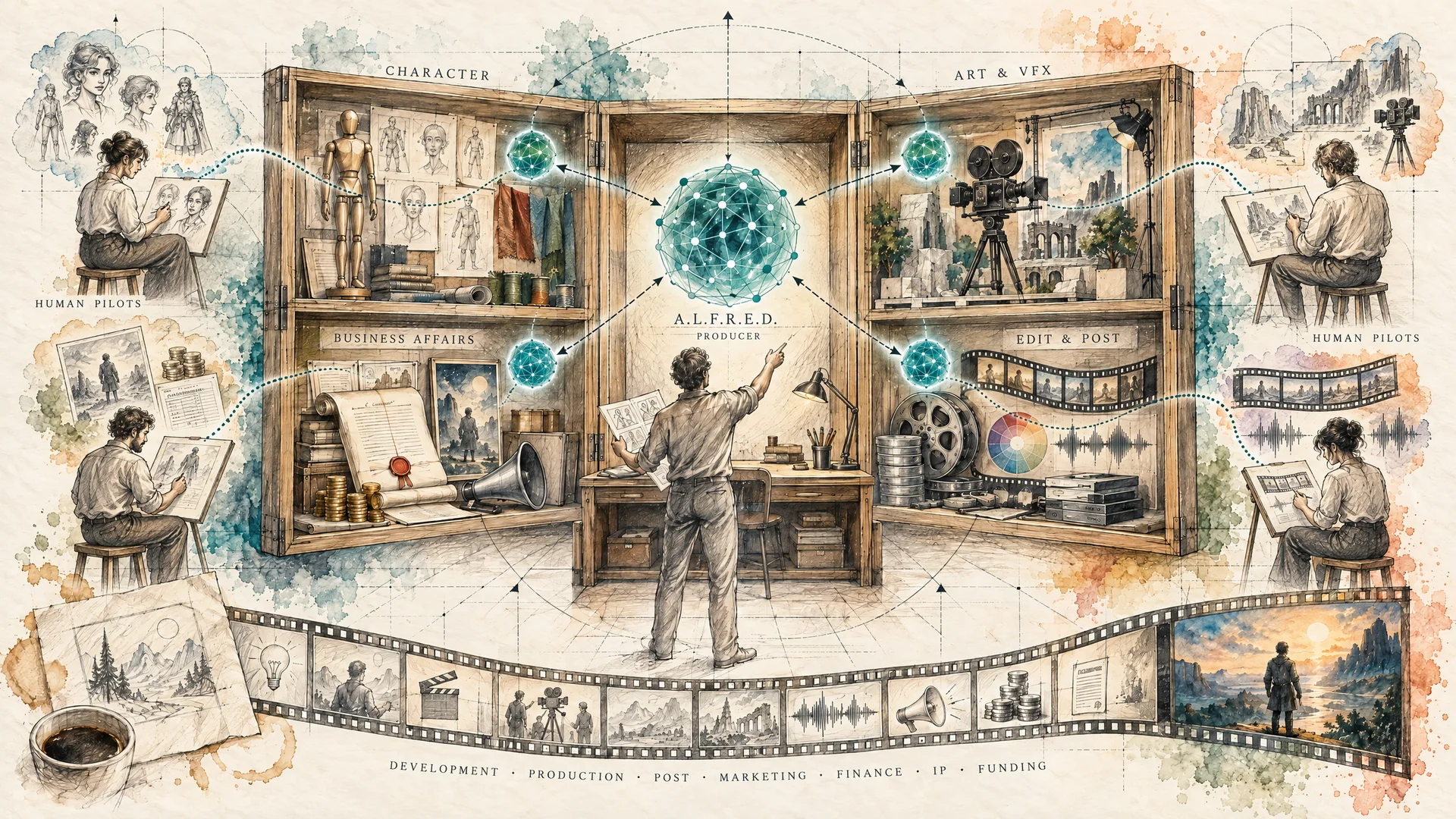
A.L.F.R.E.D. AT THE CENTRE
A.L.F.R.E.D. — Adaptive Learning for Film Research, Execution & Delivery is the producer DigiPloyee of Story Room Studio. He oversees four specialist DigiPloyees and their human pilots.
A.L.F.R.E.D. translates the creative lead’s direction into clear assignments for each department, coordinates dependencies across the production, challenges weak handoffs and verifies each department’s work before it reaches the lead.
When two departments pull in different directions, he frames the decision for the people in charge rather than quietly choosing a winner. Creators, producers and decision-makers remain in command of the whole studio.
One producer. Four specialists. People in command.
Producer DigiPloyee
Development, production management, finance and creative vision. Directs the four specialists and presents quality-checked work to the lead.
Content Supervisor & Key Character Designer
Visual identity, character consistency and style-guide enforcement across every scene.
Art Director & VFX Supervisor
Environments, visual effects, previsualization and technical shot design.
Editor, Post, Colour & Sound
Assembly, grading, dialogue, music and final delivery.
Business Affairs, Accounting & Marketing
Bookkeeping, financing records, legal coordination, distribution strategy and promotional campaigns.
One creator can run the entire studio through A.L.F.R.E.D. At full scale, five human operators pilot it: the lead at the producer’s desk and an experienced pilot beside each specialist DigiPloyee.
THE CREATOR REMAINS THE PILOT
The tools serve the story.
The story comes from people.
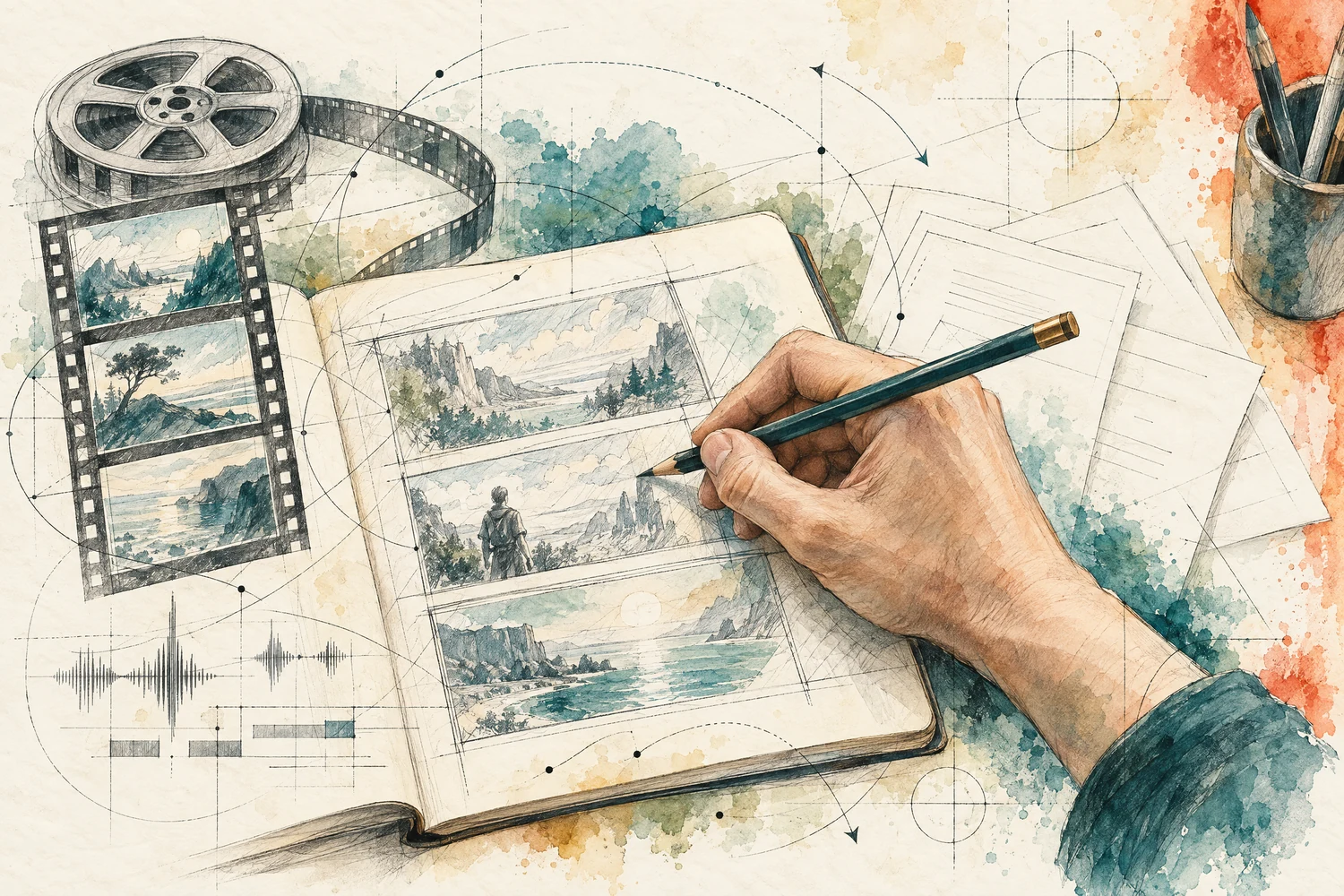
“We are not making an AI movie machine. DragonSun Technologies and GravityLabs have made the next evolution in storytelling—better tools which allow the imagination of the human to emerge without limits.”
Jason Thon · Founder & Head of R&D, DragonSun Technologies
Human pilots direct the creative work. DragonSun’s protocols and Living Database memory retain approved workflows, creative choices and revisions, so the studio can carry what its pilots have taught it into later work.
Development → production → post → delivery
Develop ideas, research, scripts, world-building and production planning into a coherent creative direction.
Bring creative and production tasks into a human-piloted workflow with clear packages and handoffs.
Coordinate editing, image, sound and finishing activities in the wider studio pipeline.
Organize review, version decisions and the final delivery work around the production’s requirements.
Marketing → finance → IP tracking → funding
Pitch materials, key-art directions, teasers, social shorts, behind-the-scenes content and audience-testing questions, all built from the approved film.
Budget assumptions, schedules, bookkeeping and finance-readiness packages, linked to the production plan they describe.
Every asset, version, decision and approval is recorded. Rejected options stay recoverable but cannot slip back into the master.
Funding packages, investor materials and outreach planning, with legal, rights and finance questions flagged for the professionals who sign off.
Marketing never rewrites the film to chase a metric. Every campaign stays linked to the approved story and the human decisions behind it.
TOOLS FOR THE CREATIVE JOURNEY
Story Room Studio Suite is designed to coordinate research and script development, storyboards and previsualization, production planning, editing and sound workflows, presentation materials and delivery preparation. Human pilots set the creative intention and approve the work; A.L.F.R.E.D. coordinates the tasks, tools and retained production knowledge.
The studio is tool-agnostic. A.L.F.R.E.D. prepares the right context for each approved program, supervises the handoff and checks the result before the next stage. As better tools reach the market, the shelf expands—without the studio forgetting the film.
The architecture serves short-form stories, music videos and brand content, and scales to feature films as the specialist DigiPloyees come online.
Story Room Studio Suite is a joint venture between DragonSun Technologies and John Lambert of GravityLabs. DragonSun created the DigiPloyees, the studio’s unique technical architecture and its backend processes. John contributed the filmmaking workflows and knowledge of movie-making processes, drawing on 57 years of making movies, from his first films at 14 to his work in Hollywood.
BUILT TO SCALE
The technology makes the timeline possible.
The people make the film worth watching.
In phase one, A.L.F.R.E.D. carries all five core functions himself: producer, writer, director/DP, art/VFX and post/delivery.
The producer performs every department’s work before he directs it. He knows what the writer needs, what a shot cannot lose, what the editor needs for continuity and what Business Affairs must protect before release.
In phase two, feature-scale productions bring the four specialist DigiPloyees online, each beneath an experienced human pilot, with A.L.F.R.E.D. remaining the producer hub.
Over time, the DigiPloyees learn their pilots’ working rhythms: when the director wants three options and when they want silence, how long the team debates before locking a shot, how each department prefers its brief. The studio becomes an institutional master apprentice, preserving experienced human intuition and making it available to the whole team.
DEVELOPMENT & NEXT PHASE
The engine specifications and production packages are complete. The next phase is integrated assembly and testing through a studio proof of concept.
This is the opportunity: take the developed architecture into integrated operation, demonstrate the workflow and advance the studio’s creative-production capability.
DragonSun is seeking investors in Story Room Studio and its next phase. The suite is a studio investment opportunity, not a software product for sale.
Explore the Studio overview (opens a new tab)INVEST IN THE STUDIO’S NEXT CHAPTER